
What Canada’s Record-Low Unemployment Means for Immigration

According to a recent Statistics Canada report, Canada’s unemployment rate hit a record low at 5.1%. As the Canadian economy exceeds pre-pandemic growth, employers look abroad to help keep up with demand.
More work permits issued
As Canadian employers continue to face labour shortages, the government is issuing more and more employer-specific work permits.
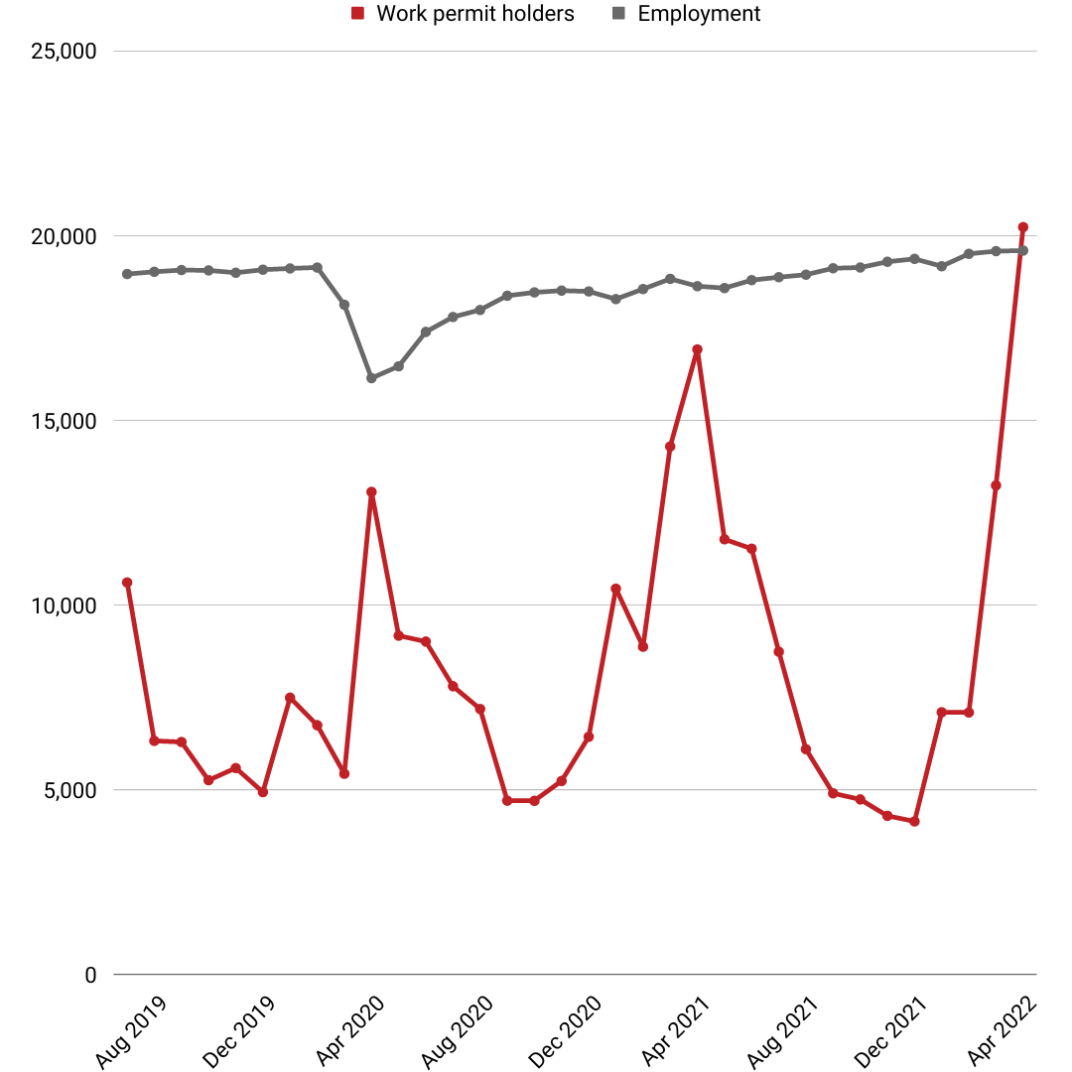
According to the latest data from IRCC, the government issued over 20,000 work permits through the Temporary Foreign Worker Program (TFWP) in April 2022. This is the highest number of work permits issued through the TFWP in a single month since data became available. As Canada’s economy continues to grow, employers will likely continue to look abroad when hiring new talent.
Pressure from provinces to increase immigration levels
Provinces across Canada are increasingly looking to immigration to help grow their local economy. As Canada’s employment rate continues to rise, pressure mounts on provincial and federal governments to increase immigration levels to help sustain growth.
Despite receiving more newcomers than any other Canadian province, the Ontario government wants to attract more skilled workers to help fill labour gaps. Ontario’s immigration minister continues to call on the federal government to double the number of newcomers the province can nominate through their provincial nominee program. Candidates that receive a nomination from a province are invited to apply to the federal government for permanent residence. Provincial governments use these programs to help respond to specific labour and demographic needs.
A recent study by the Institut du Québec think tank proposes that Quebec should also increase immigration levels and cut delays to help ease the province’s labour shortage. According to the study, the federal government should provide more authority to Quebec in processing applications. The study suggests that Quebec should set up a fast-track immigration stream that would allow newcomers to settle and work in the province more quickly.
Making it easier for new immigrants to work in Canada
Many new Canadian immigrants face challenges when searching for employment in their line of work once they land. However, according to a new report, the recent shift in Canada’s labour market has made it easier for newcomers to find a job in their field.
The Canadian government is also making it easier for immigrants to work in their profession by investing in training programs and employment services. The need for these services has become increasingly apparent amid Canada’s labour shortage. To help bridge this gap, the federal government announced in 2021 that they would be investing $100 million in settlement services over a three-year period.
With an aging population and declining birth rates, immigration is more important now than ever. Interested in learning more about your options for Canadian immigration? Complete our free online assessment form for a full evaluation of your immigration options!
Free assessmentDiscover your Canadian immigration options. Get your free assessment now!